
When Does Collagen Loss Start? Early Signs, Causes & How to Slow It Naturally
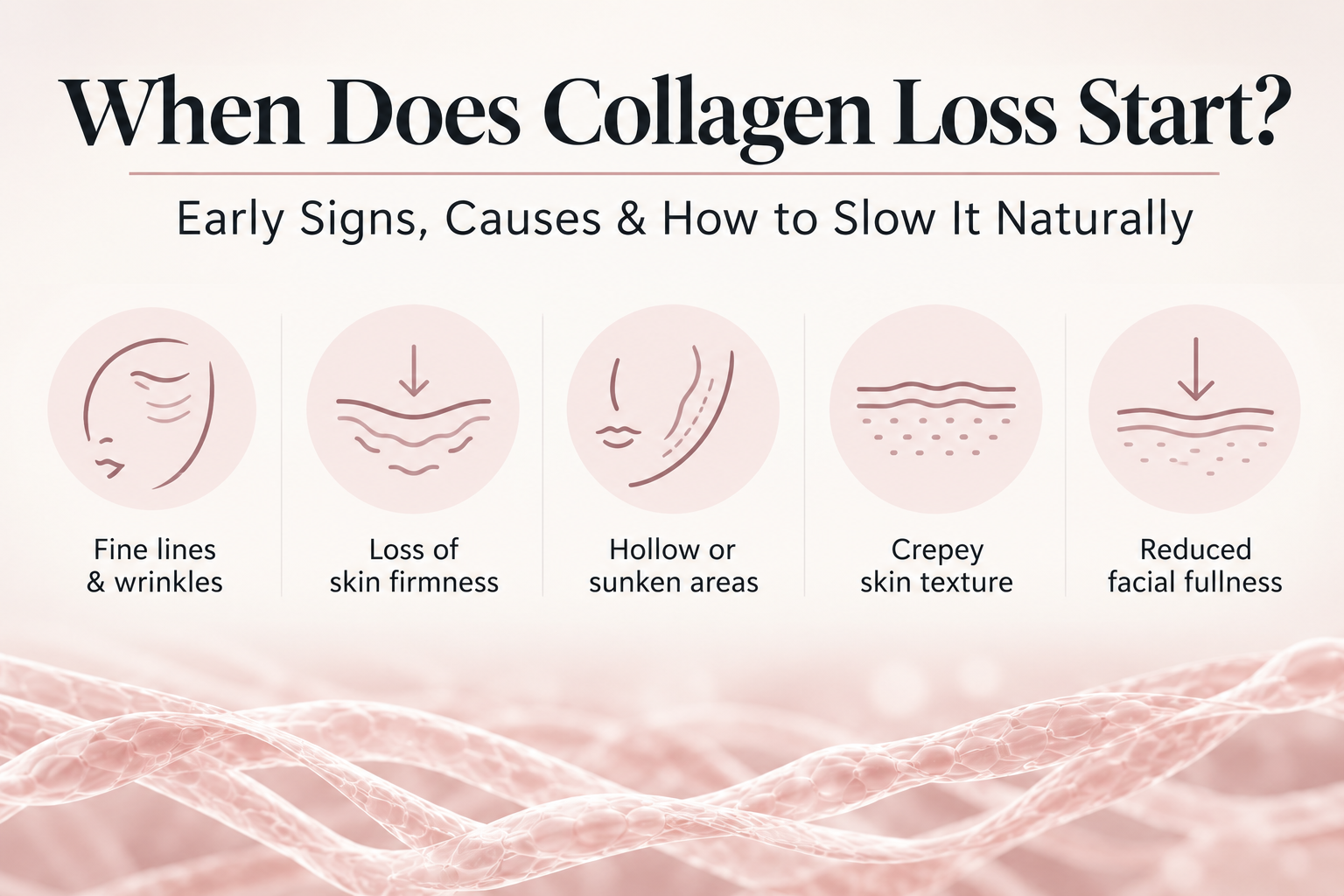
Quick Answer
Most people think collagen loss begins in their forties or fifties, but it actually starts much earlier. Beginning in your mid-to-late twenties, your body gradually produces less collagen each year. Over time, this natural decline can contribute to fine lines, reduced skin elasticity, skin laxity, and changes in facial definition. While collagen loss is a normal part of aging, understanding how it happens can help you make informed decisions about caring for your skin.
One of the most common things I hear is, "I feel like I aged overnight." The reality is, almost no one does. These changes have usually been happening quietly for years—we just don't notice them until they reach a tipping point.
Collagen loss is a slow, natural process that often begins years before you ever notice it in the mirror. By the time you see those first visible signs of aging, your body has usually been producing less collagen for quite some time.
Learning how collagen changes with age can help explain why your skin looks different—and why certain skincare habits and treatments become more important over time.
At Beauty Energy Exchange, I believe education is just as important as treatment. When you understand what's happening beneath the surface of your skin, you can make confident, informed decisions about your care.
What Is Collagen?
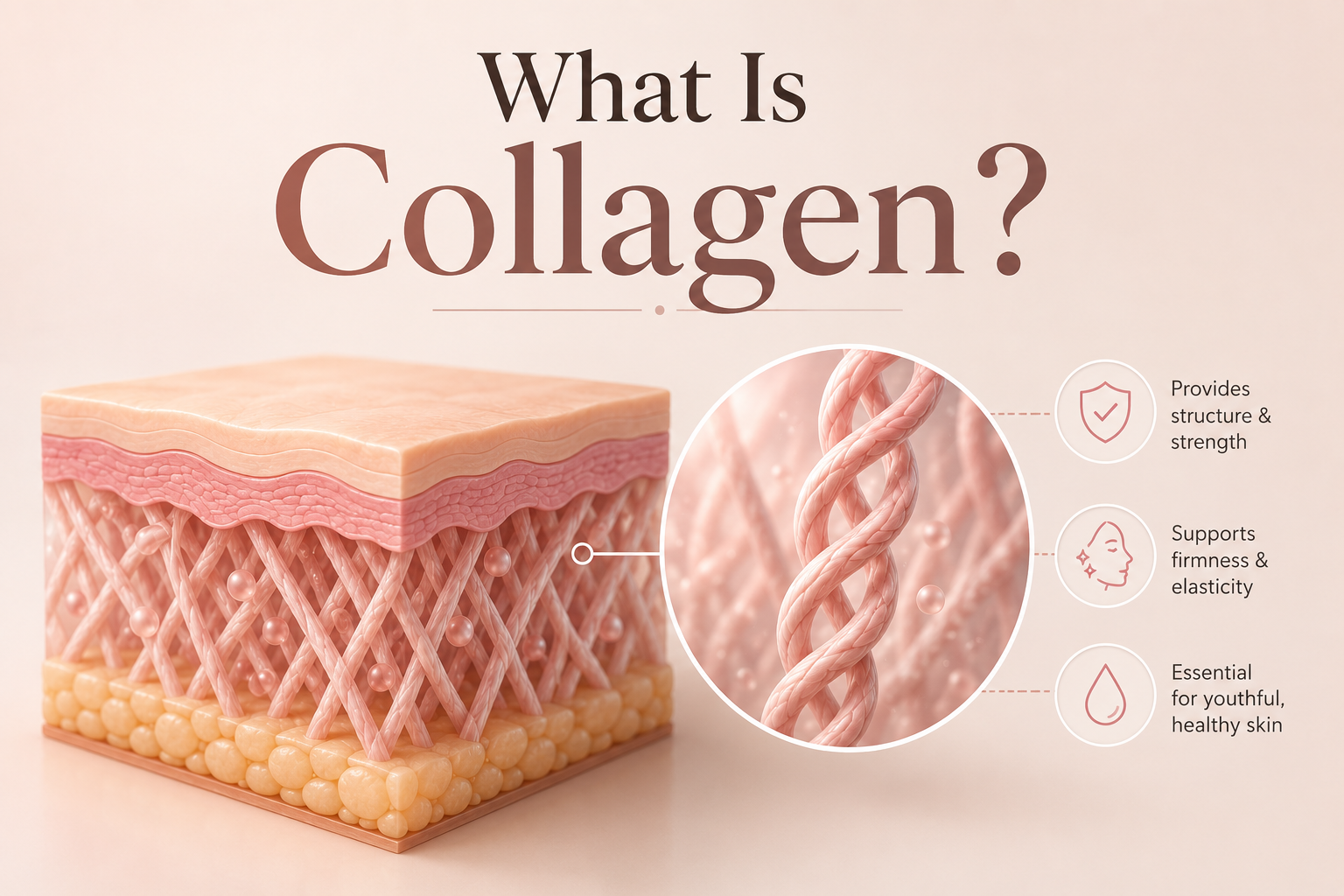
Collagen is the most abundant protein in the human body, and it's one of the main reasons youthful skin looks firm, smooth, and resilient.
Think of collagen as your skin's structural support system. It provides strength and firmness while helping your skin maintain its elasticity and shape.
Healthy collagen helps support:
Firmer skin
Better elasticity
Smoother texture
Stronger structural support
More defined facial contours
Although collagen is found throughout the body, it's especially important in the skin. As collagen production gradually slows with age, the skin becomes thinner, less elastic, and more prone to the visible changes we associate with aging.
When Does Collagen Loss Start?
This is often the biggest surprise for patients.
Most research suggests that collagen production begins slowing during your mid-to-late twenties. The decline is gradual, which is why most people don't notice changes immediately.
Instead, collagen loss quietly progresses beneath the surface for years before becoming visible.
Many patients first notice subtle changes during their thirties, such as:
Fine lines around the eyes
Slightly softer skin
Less facial firmness
Early changes along the jawline
Skin that doesn't seem as "bouncy" as it once was
These changes are completely normal and happen to everyone at a different pace.
Why Does Collagen Decline?
Aging is only one piece of the puzzle.
Throughout your life, your body is constantly making new collagen while also breaking down old collagen. When you're younger, these two processes stay fairly balanced, helping your skin remain firm, smooth, and resilient.
As we age, that balance begins to change. The cells responsible for producing collagen become less active, so your body continues making collagen—but not as efficiently as it did when you were younger.
At the same time, enzymes called collagenases continue breaking down older collagen as part of your body's normal repair process. This is completely natural. The difference is that, over time, your body isn't able to replace collagen as quickly as it's being broken down.
Several factors influence how quickly that happens.
Natural Aging
Natural aging is the biggest factor. As collagen production gradually slows, the skin loses some of its strength, elasticity, and structural support. These changes happen slowly over many years, which is why most people don't notice them right away.
Sun Exposure
If I could recommend one thing to protect collagen, it would be sunscreen.
Ultraviolet (UV) radiation is one of the leading causes of premature collagen breakdown. It damages collagen fibers, increases the activity of collagenases, and can also affect the fibroblasts—the cells responsible for producing new collagen.
Repeated sun exposure damages collagen fibers and accelerates visible signs of aging, including wrinkles, uneven skin texture, skin laxity, and loss of firmness.
Smoking
Smoking affects circulation and increases oxidative stress, making it more difficult for healthy collagen to form and repair itself.
Over time, this contributes to premature aging and reduced skin quality.
Hormonal Changes
Hormones also play a significant role.
During perimenopause and menopause, declining estrogen levels can contribute to faster collagen loss. Many women notice that their skin becomes thinner, drier, and less firm during this stage of life.
Lifestyle Factors
Healthy skin is influenced by many everyday habits.
Things like:
Poor nutrition
Chronic stress
Lack of sleep
Dehydration
Environmental pollution
can all affect your skin's overall health and its ability to maintain healthy collagen.
While these factors don't completely determine how you'll age, they do influence how well your skin can repair itself and maintain healthy collagen over time.
Early Signs of Collagen Loss
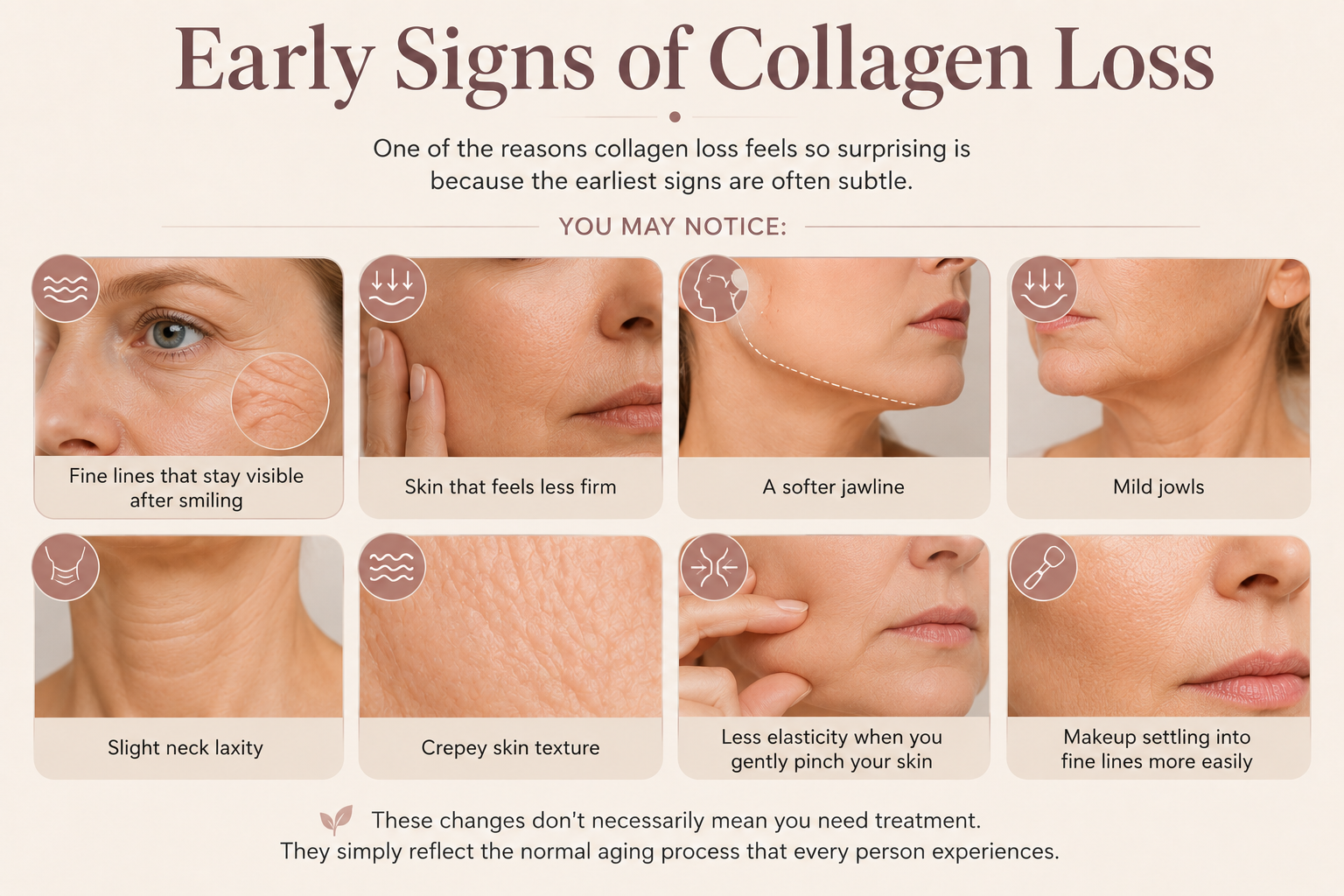
One of the reasons collagen loss feels so surprising is because the earliest signs are often subtle.
You may notice:
Fine lines that stay visible after smiling
Skin that feels less firm
A softer jawline
Mild jowls
Slight neck laxity
Crepey skin texture
Less elasticity when you gently pinch your skin
Makeup settling into fine lines more easily
These changes don't necessarily mean you need treatment.
They simply reflect the normal aging process that every person experiences.
Collagen Loss Looks Different at Every Age
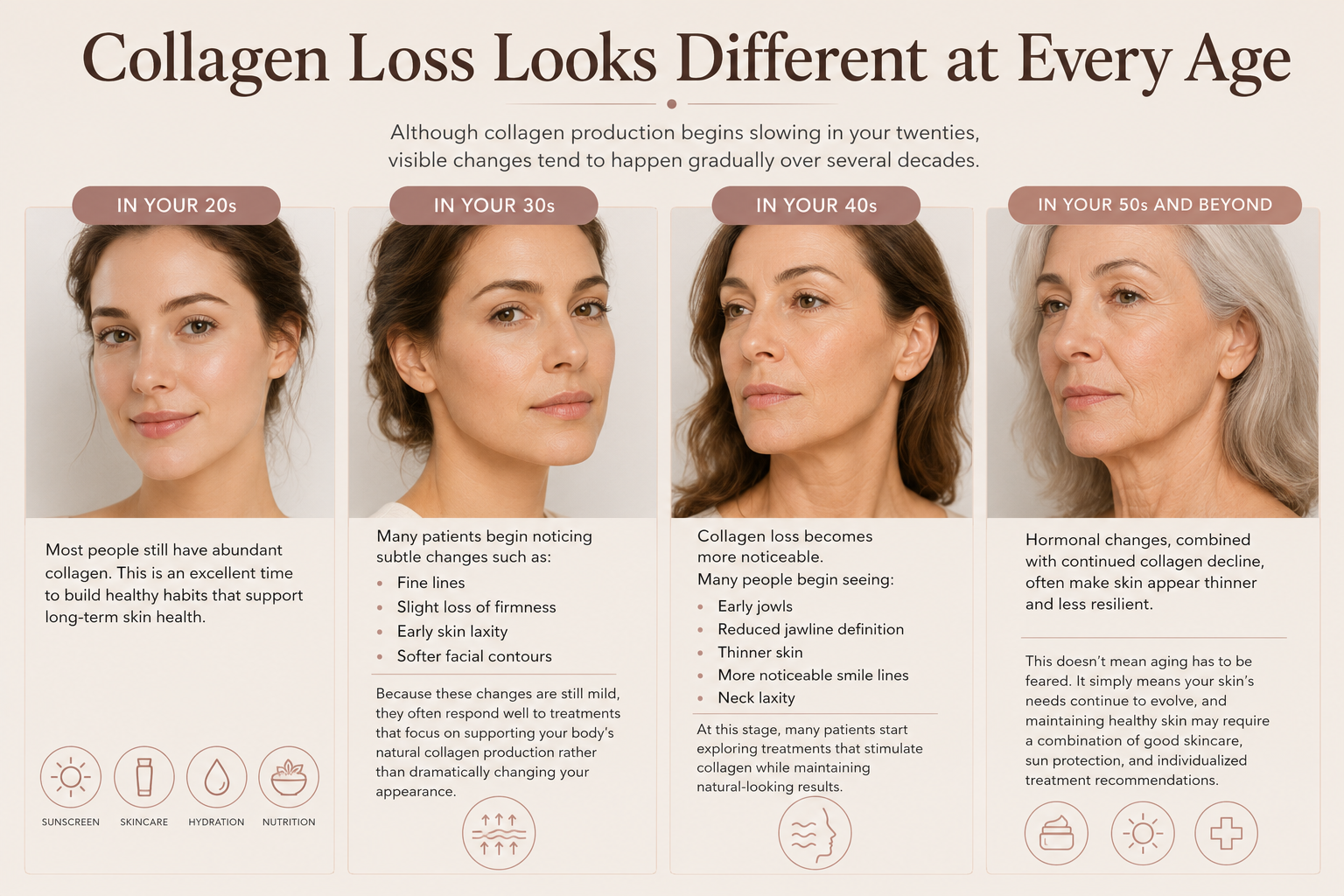
Although collagen production begins slowing in your twenties, the visible effects tend to appear gradually over several decades. Exactly when you notice those changes depends on your genetics, lifestyle, sun exposure, and overall skin health.
In Your 20s
Most people still have abundant collagen.
This is an excellent time to build healthy habits that support long-term skin health, including daily sunscreen, a consistent skincare routine, hydration, and good nutrition.
Protecting the collagen you already have is one of the best investments you can make in your skin.
In Your 30s
Many patients begin noticing subtle changes such as:
Fine lines
Slight loss of firmness
Early skin laxity
Softer facial contours
Because these changes are still mild, they often respond well to treatments that support your body's natural collagen production rather than dramatically changing your appearance.
My goal has never been to make you look different. It's to help you maintain healthy skin and natural-looking results as you age.
If you'd like to learn more about one of the most effective collagen-stimulating technologies available today, you may enjoy reading XERF Skin Tightening in San Diego: Firmer Skin Without Surgery.
In Your 40s
By your forties, collagen loss often becomes more noticeable.
Many people begin seeing:
Early jowls
Reduced jawline definition
Thinner skin
More noticeable smile lines
Neck laxity
At this stage, many patients begin exploring treatments that stimulate collagen while maintaining natural-looking results.
Every treatment plan I create is personalized. I'll evaluate your skin quality, facial anatomy, and goals before recommending a treatment plan that's right for you.
If you're curious about why skin becomes looser over time, I also recommend reading What Causes Skin Laxity? Can It Be Reversed Without Surgery?
In Your 50s and Beyond
Hormonal changes, combined with continued collagen loss, often make skin appear thinner, drier, and less resilient.
That doesn't mean aging has to be feared.
It simply means your skin's needs continue to evolve. For many people, maintaining healthy skin at this stage includes a combination of good skincare, daily sun protection, healthy lifestyle habits, and individualized treatment recommendations.
The goal isn't to stop aging—it's to help your skin stay as healthy and resilient as possible through every stage of life.
Can You Naturally Increase Collagen?
One of the most common questions I hear is, "Can I get my collagen back naturally?"
The answer isn't quite as simple as yes or no.
Your body continues producing collagen throughout your life, but the rate of production slows with age. While we can't stop the natural aging process, there are healthy habits that help protect the collagen you have and support your body's ability to produce new collagen.
Some of the best habits include:
Wearing sunscreen every day
Eating enough protein
Staying hydrated
Getting quality sleep
Managing stress
Avoiding smoking
Following a consistent skincare routine
These habits won't reverse decades of collagen loss, but they can help support healthier skin and slow unnecessary collagen breakdown over time.
Can Collagen Supplements Replace Lost Collagen?
This is another question I hear almost every week.
Collagen supplements have become incredibly popular, and while early research is promising, results can vary from person to person.
A healthy diet that includes adequate protein, vitamin C, zinc, and other nutrients gives your body the building blocks it needs to produce collagen naturally.
Supplements may play a supportive role for some individuals, but they shouldn't be viewed as a replacement for healthy lifestyle habits or personalized skincare recommendations.
If you're considering supplements, it's always a good idea to discuss them with your healthcare provider to determine what's appropriate for your overall health.
What Happens When Collagen Continues to Decline?
As collagen continues to decline over time, the changes become more noticeable.
You may begin to notice:
Thinner skin
Fine lines becoming more noticeable
Wrinkles that remain even when your face is relaxed
Softer jawline definition
Mild jowls
Skin that doesn't "bounce back" as easily
Looser skin along the neck
Overall loss of firmness
These changes are completely normal and happen to everyone at their own pace.
No two people age exactly the same way, which is why treatment recommendations should never be one-size-fits-all.
Is Collagen Loss the Same as Skin Laxity?
Not exactly.
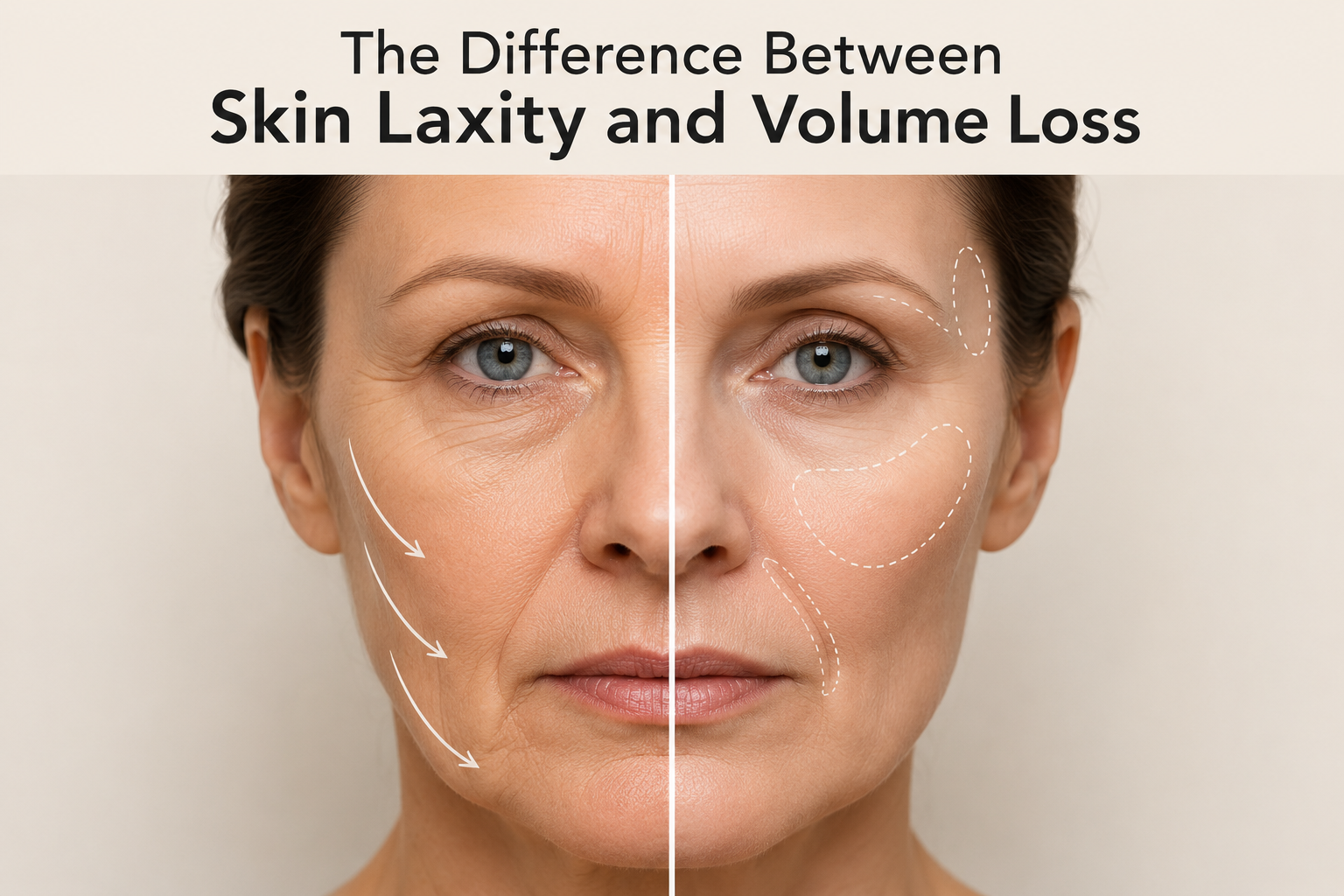
Collagen loss is one of the underlying causes of skin laxity, but they aren't interchangeable terms.
Collagen loss describes what's happening beneath the surface.
Skin laxity describes what you actually see in the mirror.
As collagen declines, the skin gradually loses strength and elasticity. Over time, that reduction in support can contribute to loose or sagging skin.
If you'd like a more in-depth explanation, I recommend reading What Causes Skin Laxity? Can It Be Reversed Without Surgery?
Treatments That Support Collagen Production
One of the things I love about aesthetic medicine is that many treatments today focus on working with your body rather than simply covering up the visible signs of aging.
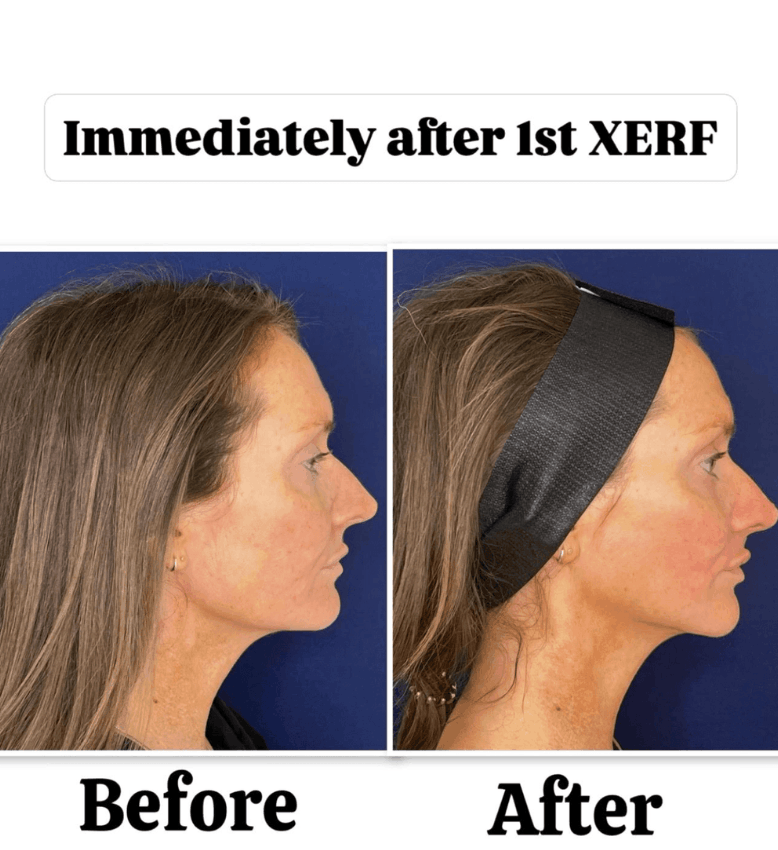
Collagen-stimulating treatments encourage your body to produce more of its own collagen, helping improve skin firmness, elasticity, and overall skin quality over time.
At Beauty Energy Exchange, every treatment plan is personalized. I'll evaluate your skin, facial anatomy, and goals before recommending what's most appropriate for you.
For patients experiencing mild to moderate skin laxity, XERF Skin Tightening uses advanced radiofrequency technology to stimulate collagen remodeling beneath the skin.
If you're wondering what to expect after treatment, you may also enjoy reading:
Can Collagen-Stimulating Treatments Be Combined With Other Procedures?
Sometimes they can.
Every patient's anatomy and goals are different, so treatment recommendations should always be personalized.
In some cases, collagen-stimulating treatments may complement other aesthetic procedures as part of a comprehensive treatment plan.
If you're curious about combination treatments, we've discussed this topic in more detail here:
Can XERF Be Combined With Botox, PRF BioFiller, or PDO Threads?
Is It Better to Start Early?
One of the biggest myths I hear is:
"I'll just wait until my skin gets worse."
The reality is that collagen loss is gradual.
Many patients choose to explore collagen-supporting treatments when they first notice subtle changes rather than waiting until skin laxity becomes more advanced.
That doesn't mean everyone should begin aesthetic treatments in their twenties or thirties.
It simply means that understanding your options allows you to make thoughtful decisions based on your own goals, lifestyle, and comfort level.
For many people, maintaining healthy skin over time feels more natural than trying to reverse years of change all at once.
Aging Gracefully Doesn't Mean Ignoring Your Skin
I truly believe there's nothing wrong with aging.
Every smile line tells part of your story.
Every year represents a life well lived.
My goal has never been to make someone look twenty years younger.
Instead, I want my patients to feel confident when they look in the mirror.
Whether that means improving skin quality, restoring confidence, or simply learning more about how the skin changes over time, education is always the first step.
Beautiful skin isn't about perfection.
It's about healthy skin that reflects who you are.
Ready to Learn More?
If you've started noticing subtle changes in your skin—or if you're simply curious about ways to support healthy collagen production—I would love to help.
During your consultation at Beauty Energy Exchange, we'll take time to evaluate your skin, discuss your goals, and create a personalized treatment plan based on your individual needs.
Whether that includes skincare recommendations, collagen-stimulating treatments like XERF Skin Tightening, or simply answering your questions, my priority is helping you feel informed and confident every step of the way.
Frequently Asked Questions
When does collagen loss start?
Collagen production typically begins to slow during your mid-to-late twenties. Because the decline happens gradually, many people don't notice visible changes until their thirties or later. Factors such as genetics, sun exposure, smoking, and hormonal changes can also influence how quickly collagen loss becomes noticeable.
What are the first signs of collagen loss?
Early signs of collagen loss often include fine lines, reduced skin firmness, softer facial contours, mild skin laxity, and skin that feels less elastic than it once did. These changes usually occur gradually over time rather than appearing all at once.
Why do we lose collagen as we age?
As we get older, the cells responsible for producing collagen become less active. In addition to the natural aging process, sun exposure, smoking, environmental damage, hormonal changes, and lifestyle factors can contribute to collagen breakdown over time.
Can collagen loss be prevented?
Collagen loss is a normal part of aging and cannot be completely prevented. However, wearing sunscreen daily, avoiding smoking, eating a balanced diet, staying hydrated, getting enough sleep, and following a consistent skincare routine may help support healthy skin and reduce premature collagen damage.
Can you rebuild collagen naturally?
Your body continues producing collagen throughout your life, although production slows with age. Healthy habits can help support your skin's natural collagen production, and some aesthetic treatments are designed to stimulate collagen remodeling. The best approach depends on your individual skin concerns and goals.
Does collagen loss cause sagging skin?
Collagen loss is one of the factors that contributes to sagging skin. As collagen and elastin decline, the skin gradually loses firmness and structural support, which can lead to skin laxity, softer facial contours, and early jowls over time.
What's the difference between collagen loss and skin laxity?
Collagen loss refers to the gradual decline of the protein that provides strength and structure to your skin. Skin laxity is the visible result that can occur when collagen and elastin decrease, causing the skin to become looser and less firm.
What treatments stimulate collagen production?
Several aesthetic treatments are designed to stimulate your body's natural collagen production. Depending on your skin and goals, your provider may recommend radiofrequency skin tightening, PRF BioFiller, microneedling, or other regenerative treatments. A personalized consultation is the best way to determine which option is appropriate for you.
