
The Difference Between Skin Laxity and Volume Loss: Why the Right Diagnosis Matters
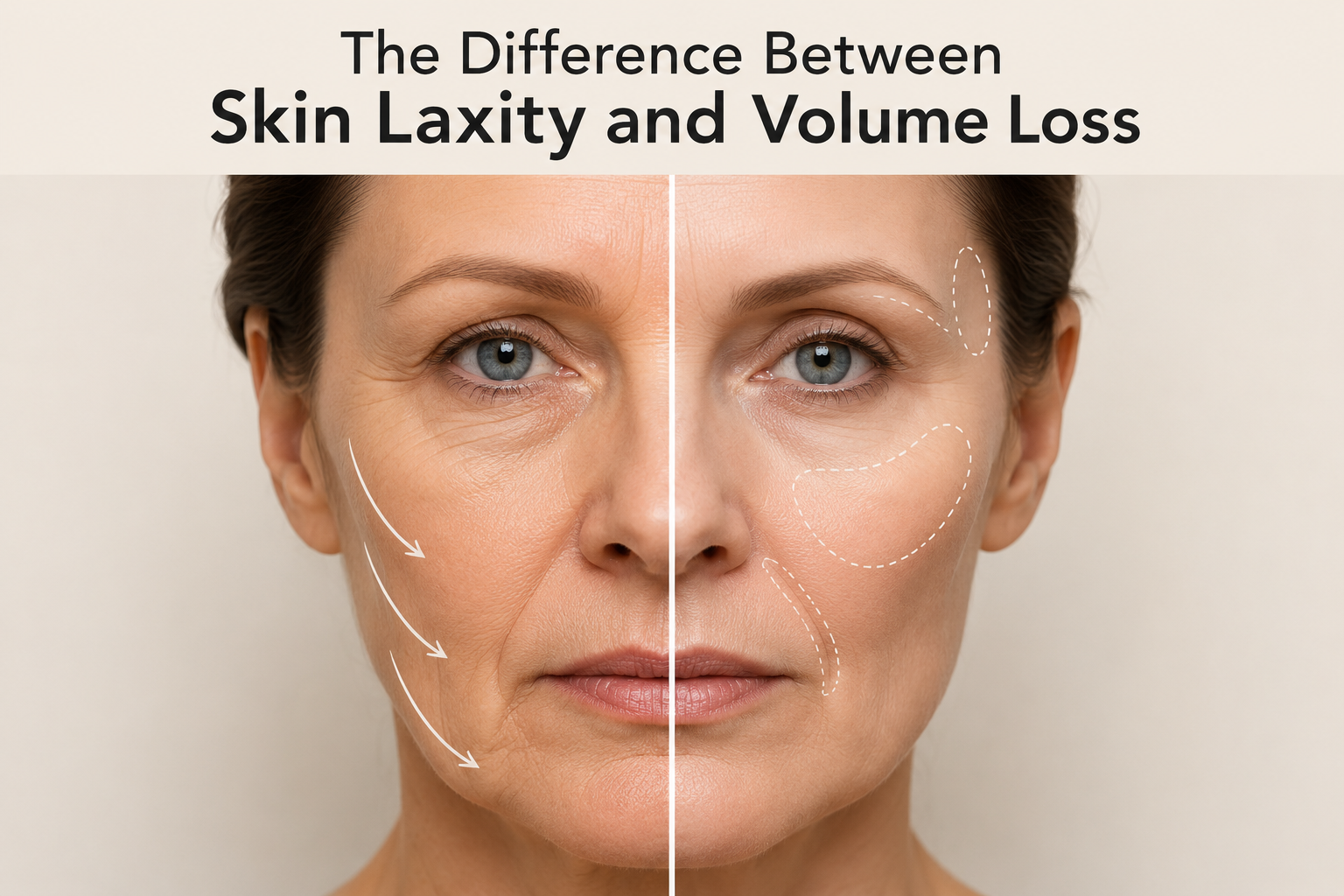
Quick Answer
One of the most common things I hear during consultations is,
"I think my skin is getting loose."
Sometimes that's exactly what's happening.
But just as often, what looks like loose skin is actually facial volume loss—or a combination of both.
As we age, we gradually lose collagen, elastin, facial fat, and even some of the structural support from our bones. Those changes can look very similar in the mirror, but they're treated very differently.
Understanding what's actually causing the change is one of the most important steps in creating natural-looking results.
Why the Right Diagnosis Matters
One of the biggest misconceptions I hear during consultations is that every sign of facial aging is caused by "loose skin."
It's easy to understand why.
Softer cheeks, early jowls, a less defined jawline, and deeper folds around the mouth can all look like the same problem.
But they aren't always caused by the same thing.
One person may have excellent facial volume but declining collagen, allowing the skin to become less firm over time.
Another may still have relatively healthy skin but has gradually lost the facial support that once kept everything lifted.
They may look similar—but they require very different treatment plans.
That's why I spend so much time understanding why your face is changing before recommending any treatment.
Once we identify the underlying cause, we can develop a personalized treatment plan that enhances your natural features instead of simply treating the symptom.
What Is Skin Laxity?
Skin laxity simply means the skin has become less firm and less elastic over time.
That happens because our bodies gradually produce less collagen and elastin as we age.
Collagen provides strength and structural support, while elastin allows the skin to stretch and return to its original position. Together, these proteins help keep the skin firm, resilient, and youthful.
As both decline, the skin becomes thinner, softer, and less able to resist gravity.
Over time you may notice:
• Early jowls
• A softer jawline
• Loose skin beneath the chin
• Neck laxity
• Crepey skin
Less definition around the lower face
These changes happen gradually over many years—not overnight.
If you'd like to learn more about why this happens, I explain it in greater detail in What Causes Skin Laxity? Can It Be Reversed Without Surgery?
What Causes Skin Laxity?
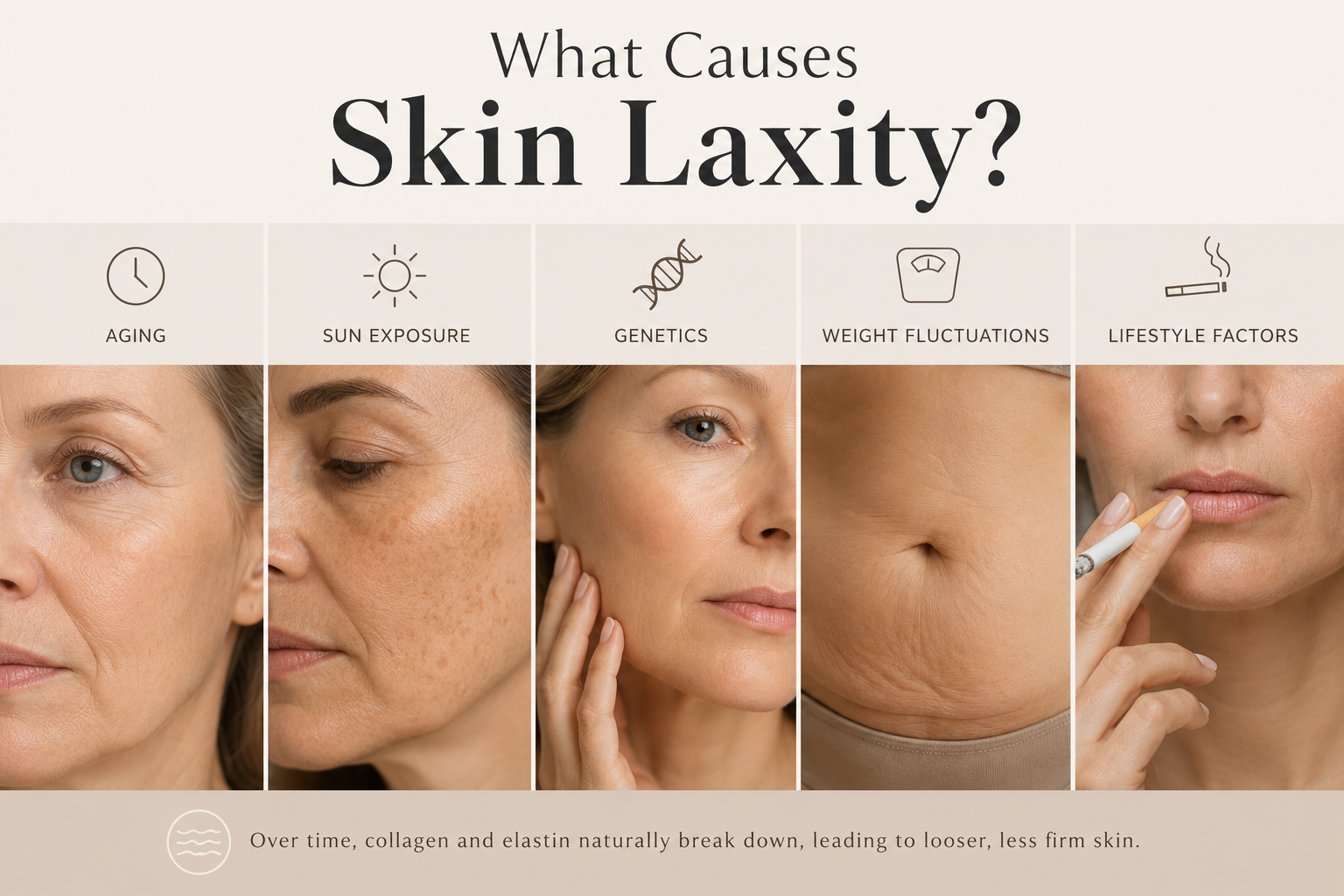
Several factors contribute to skin laxity.
The most common include:
Natural aging
Declining collagen production
Reduced elastin
Sun exposure
Smoking
Weight fluctuations
Genetics
While aging is inevitable, daily habits can influence how quickly these changes become visible.
Protecting your skin from UV damage, avoiding smoking, maintaining a healthy lifestyle, and following a consistent skincare routine all help support healthier skin over time.
For many patients, collagen-stimulating treatments may also be considered when skin laxity becomes more noticeable.
What Is Volume Loss?
Volume loss is different from skin laxity.
Instead of the skin becoming loose, the structures underneath the skin gradually change.
Over time we lose facial fat, collagen, connective tissue, and even some of the support from our facial bones.
Think of it like a house.
The skin is the roof.
Underneath are beams and support.
If those supporting structures slowly shrink, the roof naturally settles.
That's why someone can look like they have loose skin when the real issue is actually volume loss.
You might notice:
• Hollow cheeks
• Sunken temples
• A flatter mid-face
• Less definition
• More prominent smile lines
The skin itself may still be relatively healthy.
Because the two conditions often occur together, it's easy to confuse one for the other without a professional evaluation.
Why Does Facial Volume Change?
Most people are surprised to learn that facial aging affects much more than just the skin.
As we age, the fat pads that give our face youthful shape gradually shrink and shift downward.
At the same time, subtle changes occur in the underlying bone structure, providing less support for the tissues above.
These changes are completely normal and happen to everyone—they simply happen at different rates.
The result is a face that appears less full, less supported, and sometimes more tired, even if the skin itself is still relatively healthy.
Unlike skin laxity, which primarily affects skin firmness, volume loss changes the overall shape and contours of the face.
Understanding this distinction is one of the most important parts of creating natural-looking aesthetic results.
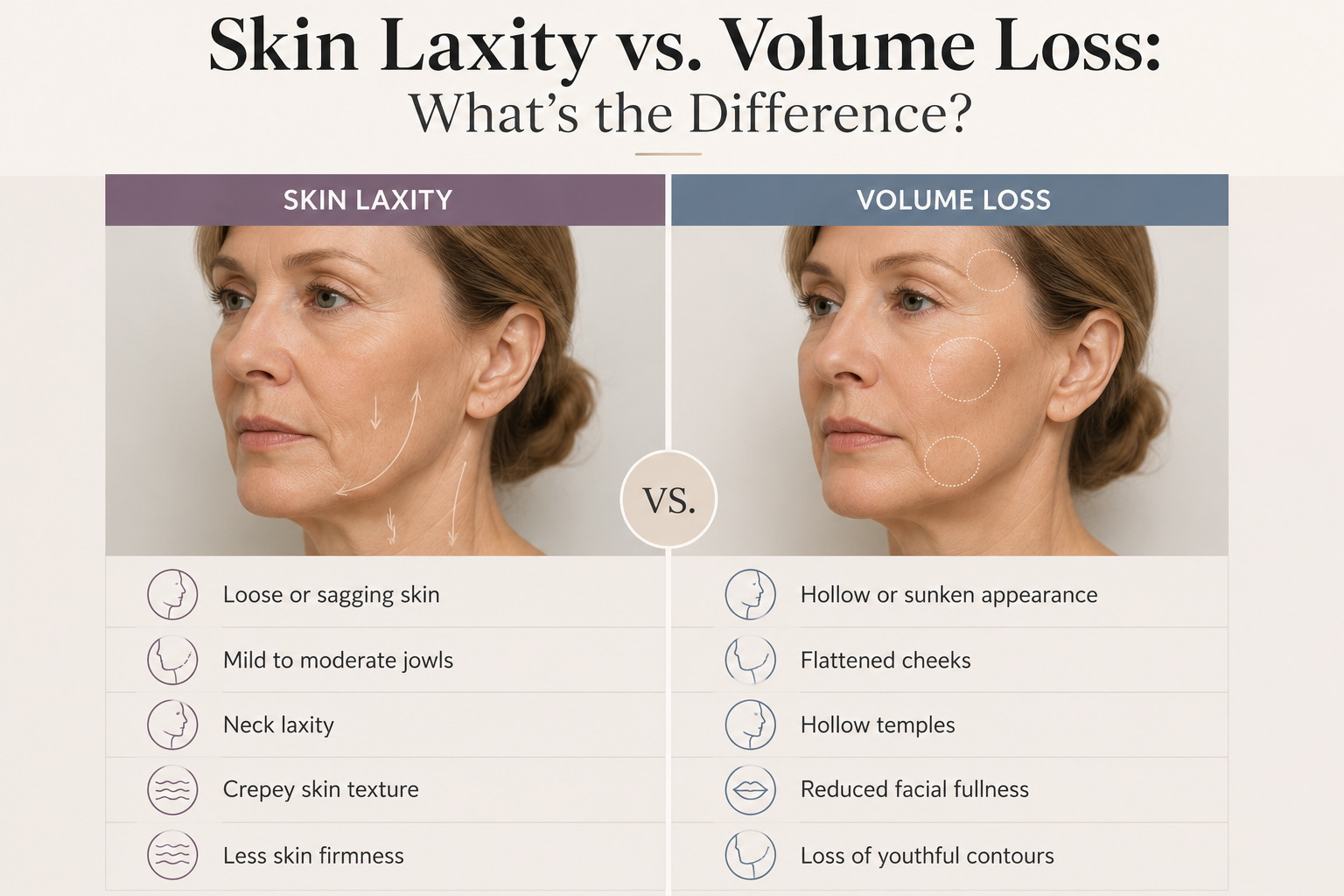
Skin Laxity vs. Volume Loss: What's the Difference?
Although both conditions contribute to facial aging, they usually present differently.
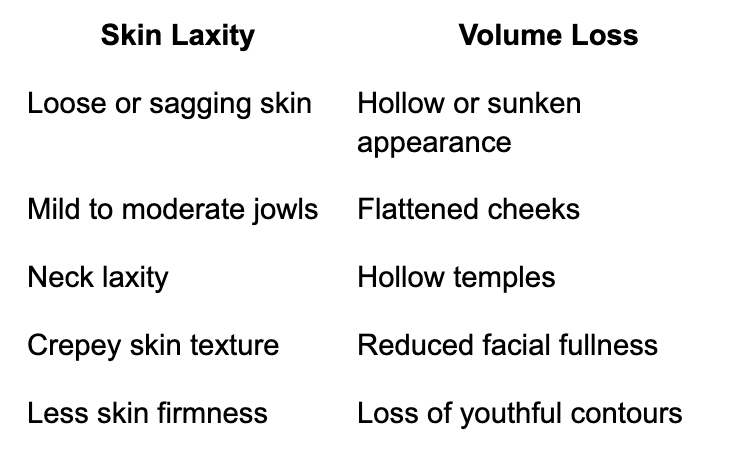
Of course, aging isn't always that straightforward.
Many patients experience both skin laxity and volume loss simultaneously.
That's one of the reasons consultations are so important. Two people with similar concerns may benefit from completely different treatment approaches depending on what's actually causing the changes.
If you're exploring options for improving loose skin without surgery, you may also enjoy reading The Best Non-Surgical Skin Tightening Treatments in San Diego.
Why the Correct Diagnosis Makes Such a Difference
One of the biggest mistakes in aesthetic medicine is treating the visible symptom instead of the underlying cause.
For example, if someone primarily has skin laxity, adding volume alone may not provide the improvement they're hoping for because the skin itself still lacks firmness.
Likewise, if facial volume loss is the primary issue, tightening the skin without restoring support may not create balanced facial proportions.
Neither treatment is "better."
They simply solve different problems.
That's why my goal during every consultation is to understand what's happening beneath the surface before recommending any treatment.
When treatment recommendations are based on facial anatomy—not trends—they tend to produce softer, more natural-looking results that allow patients to continue looking like themselves.
How Skin Laxity and Volume Loss Are Treated Differently
Once we understand why your face is changing, we can choose treatments that address the underlying cause.
If collagen loss is the primary concern, I may recommend treatments that stimulate your body's natural collagen production.
If volume loss is playing a larger role, restoring structural support may create a more balanced result.
And for many patients, the answer is a thoughtful combination of both.
The best treatment plan is always one that's customized to your anatomy rather than following the latest trend.
Treatments That May Help Improve Skin Laxity
If collagen loss is the primary cause of your concerns, treatments that stimulate your body's natural collagen production may be appropriate.
Rather than adding volume, these treatments focus on improving skin quality by encouraging collagen remodeling beneath the surface. As new collagen develops over the following weeks and months, many patients notice gradual improvements in skin firmness, elasticity, and overall texture.
At Beauty Energy Exchange, one of the technologies we use for appropriate candidates is XERF Skin Tightening. XERF uses advanced radiofrequency energy to stimulate collagen production without surgery, making it a popular option for patients who want natural-looking skin tightening with little to no downtime.
One of the things patients appreciate most is that results develop gradually. Instead of looking dramatically different overnight, improvements appear as your body naturally produces new collagen.
If you're wondering how long that process typically takes, you may also enjoy reading How Long Does It Take to See Results From XERF?
If you're researching different radiofrequency technologies, you may also find this comparison helpful:
XERF vs. Morpheus8: Which Skin Tightening Treatment Is Better?
Treatments That May Help Restore Facial Volume
When facial volume loss is the primary concern, the goal is different.
Instead of tightening the skin, treatment focuses on restoring the underlying support that has gradually diminished over time.
Depending on your anatomy and goals, treatment recommendations may include:
PRF BioFiller
Dermal fillers
Biostimulatory treatments
Combination therapies
Every option has its own benefits, and not every treatment is appropriate for every patient. During your consultation, we'll discuss your goals, evaluate your facial structure, and determine which approach best supports a natural-looking outcome.
One of my priorities is avoiding an overfilled appearance. Beautiful aesthetic results shouldn't make you look like someone else—they should simply help you look like a refreshed version of yourself.
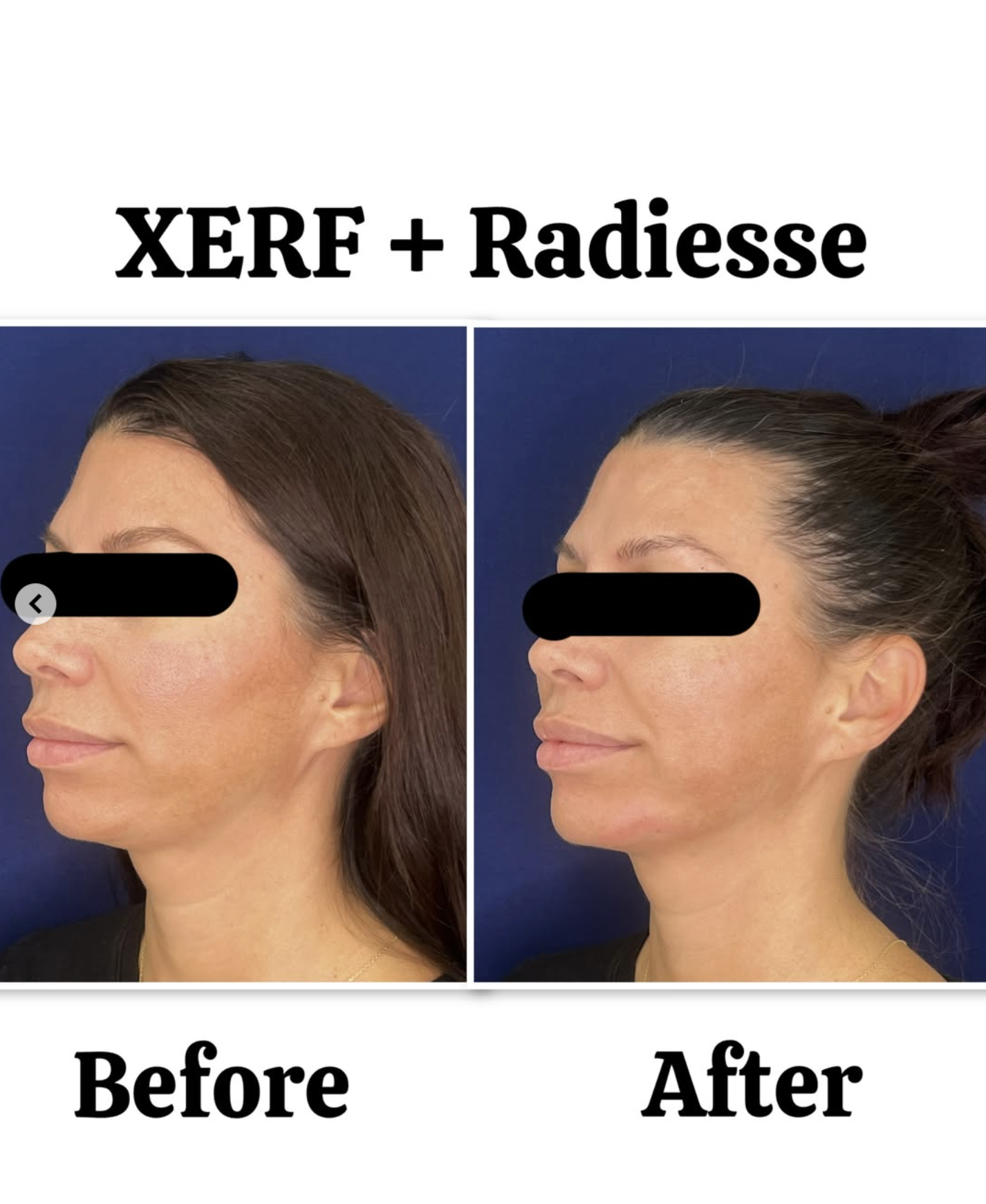
This photo (above) was taken immediately after her first XERF treatment. We used just one syringe of Radiesse to provide subtle support through the chin area, but most of the improvement you’re seeing here is from the immediate tightening effect of XERF.
Many Patients Benefit From Combination Treatments
One of the biggest lessons I've learned throughout my career is that facial aging is rarely caused by a single factor.
Most patients experience several changes happening at the same time.
These may include:
Skin laxity
Volume loss
Fine lines and wrinkles
Changes in skin texture
Reduced collagen production
Changes in facial proportions
That's why many treatment plans involve more than one approach.
For example, someone with mild skin laxity and early volume loss may benefit from treatments that both stimulate collagen production and restore subtle facial support.
When appropriate, combination treatments can address multiple aspects of facial aging while maintaining natural facial movement and expression.
If you'd like to learn more about how these treatments can work together, I discuss this in Can XERF Be Combined With Botox, PRF BioFiller, or PDO Threads?
When Is Surgery the Better Option?
This is another question I hear frequently.
The answer depends on the severity of skin laxity, your goals, and your personal preferences.
For patients with mild to moderate skin laxity, non-surgical collagen-stimulating treatments may provide meaningful improvements.
For others with more advanced skin laxity, surgical procedures may ultimately provide the most dramatic correction.
Neither option is inherently "better." They're simply designed for different situations.
One of the most important parts of my job is helping patients understand what is—and isn't—realistic based on their individual anatomy.
If you're curious about how non-surgical skin tightening compares with surgery, you may enjoy reading XERF vs. Surgical Facelift: Which Is Right for You?
Can you combine XERF with other treatments 🧐?
Why a Professional Consultation Matters
One of the biggest advantages of an in-person consultation is that it allows us to look beyond the mirror.
Instead of simply asking, "What treatment do I need?" we start by asking, "Why is this change happening?"
That conversation often reveals that what appears to be loose skin is actually volume loss—or that volume loss isn't the primary concern after all.
Every recommendation I make begins with understanding your facial anatomy, skin quality, medical history, and long-term goals.
Technology plays an important role in aesthetic medicine, but thoughtful treatment planning is what creates the most natural-looking results.
Aging Beautifully Starts With Understanding Your Skin
Facial aging is personal.
No two people lose collagen at the same rate.
No two people lose facial volume in exactly the same way.
And no two patients have the same goals.
That's why I believe education is one of the most valuable parts of every consultation.
Understanding why your face is changing allows us to choose treatments that address the true cause—not simply the visible symptom.
Whether your goal is to improve skin firmness, restore facial support, or simply learn more about your options, we're here to help you feel confident in every step of the process.
My goal isn't for people to wonder what you've had done.
My goal is for them to wonder why you look so incredible.
Always You. Never Overdone.
If you'd like to learn whether your concerns are related to skin laxity, volume loss, or both, schedule a consultation to discuss whether XERF Skin Tightening or another personalized treatment plan may be right for you.
Frequently Asked Questions
What is skin laxity?
Skin laxity is the gradual loosening or sagging of the skin that occurs as collagen and elastin production declines. It commonly affects the jawline, neck, cheeks, and lower face.
What is facial volume loss?
Facial volume loss happens when the fat, collagen, and structural support beneath the skin decrease over time. This may create hollow cheeks, sunken temples, deeper folds, and less facial definition.
How can I tell if I have skin laxity or volume loss?
Skin laxity usually appears as loose or sagging skin, while volume loss tends to create a hollow, flattened, or sunken appearance. Many people experience both at the same time, so a professional evaluation is the best way to identify the primary cause.
Can skin laxity and volume loss happen at the same time?
Yes. It is very common to experience both skin laxity and volume loss as part of the natural aging process. A combination treatment plan may be recommended when both concerns are contributing to the overall appearance.
What treatments may help improve skin laxity?
Collagen-stimulating treatments, including radiofrequency skin tightening such as XERF, may help improve skin firmness and elasticity in appropriate candidates. The best option depends on your skin quality, anatomy, and goals.
What treatments may help restore facial volume?
Depending on your needs, PRF BioFiller, dermal fillers, biostimulatory treatments, or other regenerative approaches may help restore facial support and improve areas of volume loss.
Can XERF restore lost facial volume?
No. XERF is designed to stimulate collagen and improve skin firmness. It does not replace lost facial volume. Patients with both laxity and volume loss may benefit from a personalized combination treatment plan.
How do I know whether I need skin tightening or filler?
The best treatment depends on what is causing the visible change. Loose or sagging skin may respond better to collagen-stimulating treatments, while hollow areas or reduced facial fullness may require volume restoration. An in-person consultation helps determine which approach is most appropriate.
Why is the correct diagnosis so important?
Treating the wrong concern may not create the result you are hoping for. Identifying whether facial aging is primarily caused by skin laxity, volume loss, or both allows for a more balanced and natural-looking treatment plan.
