
What Makes a Great Aesthetic Injector? Credentials, Anatomy & Why Technique Matters
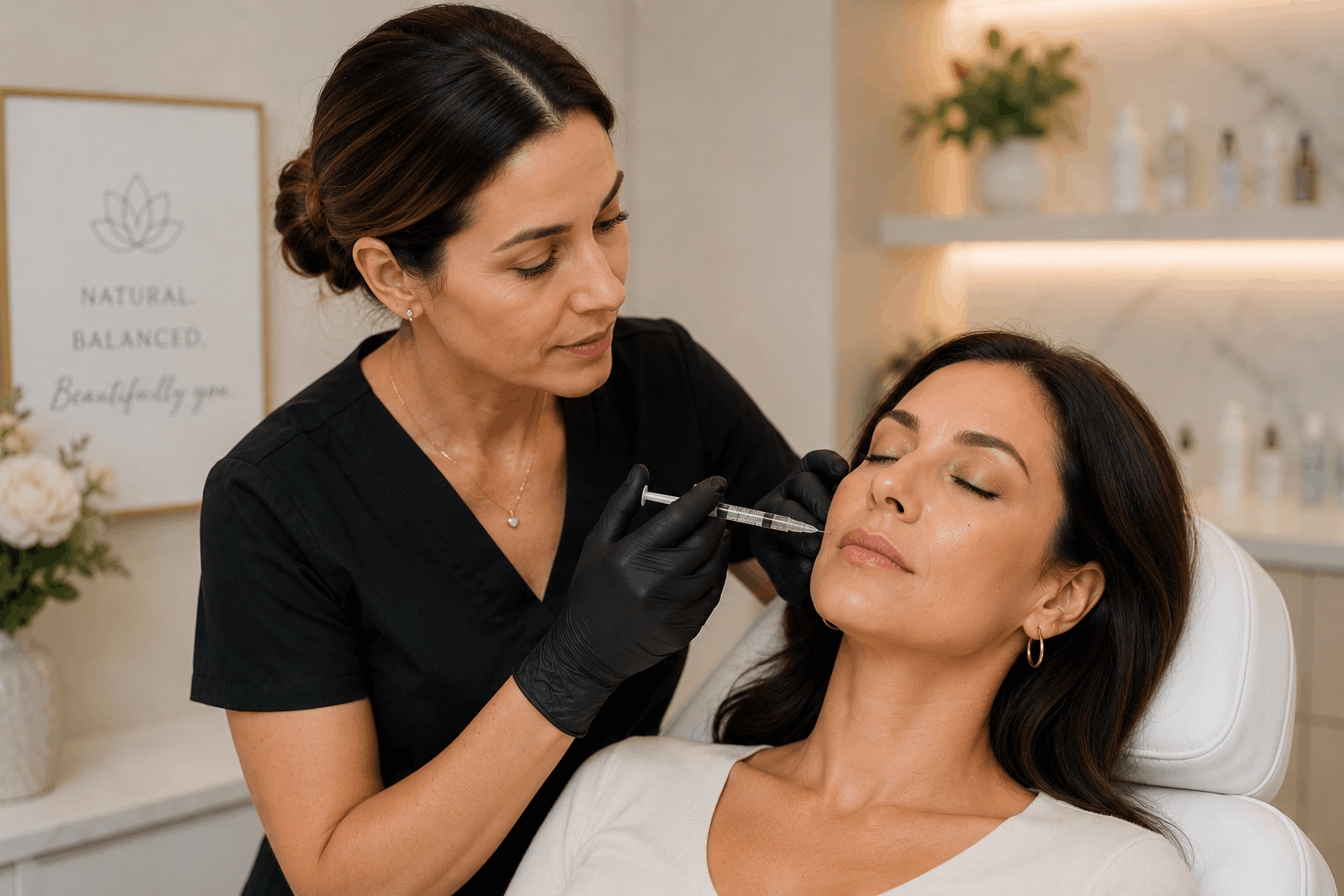
When you're considering Botox, dermal filler, lip filler, or another injectable treatment, it's easy to focus on the product.
Which filler should I get?
How many units of Botox do I need?
Which brand is best?
But there's another factor that's arguably even more important:
Who is doing the injecting?
The same injectable product can produce very different results depending on the provider's training, understanding of facial anatomy, technique, aesthetic judgment, and treatment philosophy.
A great aesthetic injector isn't simply someone who knows how to administer Botox or filler. They understand the face as a whole and know when to treat, where to treat—and sometimes, when not to treat.
Here's what to look for when choosing an aesthetic injector.
1. Medical Credentials Matter
Aesthetic injectables are medical treatments.
Before booking, find out who will actually be performing your injections and look into their professional education, licensing, and aesthetic training.
At Beauty Energy Exchange, every aesthetic treatment is performed by Nyree Van Maarseveen, NP, CNM, who brings extensive clinical education and experience to her work in aesthetics.
Nyree earned a B.S. in Human Development and Family Studies from Cornell University, a B.S. in Nursing from Johns Hopkins University, and a Master of Science in Nursing from San Diego State University.
But formal education is only one part of becoming an experienced aesthetic provider.
Aesthetic medicine continues to evolve, which makes ongoing training especially important.
2. Look Beyond Basic Injectable Training
Completing an introductory Botox or filler course is very different from continually advancing your skills.
When researching an injector, consider asking:
What additional aesthetic training have you completed?
Nyree's continuing education has included Botox Levels 1 and 2, Dermal Fillers Levels 1 and 2, Master Lips training, advanced dermal filler education, an 8 Point Lift course, regenerative dermal filler training, biostimulatory filler training, advanced preceptorships, facial ultrasound education, and hands-on PDO thread lift training.
You can learn more about Nyree's advanced aesthetic education and training and the continuing education behind her approach to patient care.
Why does that matter?
Because injectables aren't a one-technique-fits-all treatment.
Different faces, ages, concerns, products, and treatment areas require different approaches.
3. A Great Injector Understands Facial Anatomy
One of the most important skills in aesthetic medicine isn't just knowing how to inject.
It's knowing what's underneath the skin.
The face contains a complex network of muscles, blood vessels, nerves, fat compartments, connective tissue, and bone.
And every patient's anatomy is a little different.
A detailed understanding of facial anatomy helps an injector think beyond individual wrinkles or isolated areas and consider how different structures work together.
Nyree has pursued advanced education specifically in this area, including a cadaver workshop focused on facial anatomy and aesthetic injectable safety and training in facial ultrasound best practices.
That's the type of continuing education worth looking for when you're choosing someone to treat your face.
Above - Nyree explaining the Swedish lip and Russian lip filler t
echniques she has learned over her years in training
4. Technique Matters Just as Much as the Product
Patients often ask which brand of filler or wrinkle relaxer is "best."
But the product is only part of the equation.
Placement matters. Amount matters. Depth matters. Technique matters. And the provider's judgment matters.
Take dermal fillers as an example.
Adding volume isn't necessarily the goal.
Strategic placement can be used to support facial structure, restore balance, and enhance existing features without making someone look like a different person.
Nyree's filler philosophy isn't simply about how much filler is used. Where it's injected matters. Her goal is to restore balance and support a patient's natural structure without creating an overdone appearance.
That's an important distinction.
A good injector isn't simply filling an area.
They're making a series of small aesthetic decisions based on the entire face.
View the before and after gallery
5. Aesthetic Judgment Is a Skill
There is both a medical and an artistic component to aesthetic injections.
Two providers can have similar medical credentials and still produce very different-looking results.
That's why you should review an injector's actual work before booking.
Look at their before-and-after photos.
Do patients still look like themselves?
Do the lips fit the person's face?
Does the face look balanced?
Are results consistently subtle or dramatic?
Does the provider's aesthetic match yours?
At Beauty Energy Exchange, Nyree's philosophy is:
Always You. Never Overdone.
The goal isn't to give every patient the same lips, cheeks, jawline, or forehead.
It's to enhance the individual person sitting in the chair.
6. Great Injectors Know That More Isn't Always Better
One of the most valuable skills an aesthetic injector can develop is restraint.
More Botox isn't always better Botox.
More filler isn't always better filler.
And sometimes the best recommendation is no treatment at all.
An experienced provider should be willing to tell you when:
You don't need additional product
A different treatment may address your concern better
An area shouldn't be treated
Your expectations aren't realistic
It's better to wait
Adding more could compromise a natural result
That may not always be what a patient expects to hear, but thoughtful aesthetic care shouldn't be about selling the maximum amount of treatment.
It should be about making good decisions for the individual patient.
7. Your Injector Should Look at Your Whole Face
If you come in concerned about one specific area, a good injector should still evaluate your face as a whole.
That's because facial features don't exist independently.
The lips relate to the chin.
The chin affects the appearance of the profile.
Cheek structure can influence the appearance of the midface.
Muscle movement affects where lines form.
Skin laxity and volume loss can sometimes create similar concerns but require completely different treatment approaches.
This doesn't mean treating your entire face.
It means understanding your entire face before deciding what to treat.
This whole-face approach is often referred to as facial balancing with dermal fillers, where treatment planning considers how individual facial features relate to one another rather than focusing on a single feature in isolation.
8. Safety Should Always Come Before Aesthetics
Beautiful results matter.
But safety comes first.
Your provider should take the time to review your health history, previous treatments, medications when relevant, allergies, and other factors that may affect treatment.
They should also be comfortable discussing potential side effects, risks, aftercare, and what to do if you have a concern.
At Beauty Energy Exchange, Nyree considers patient comfort and safety a priority. Her approach includes helping patients who are nervous about needles or who have previously felt faint during treatment feel calm and cared for throughout their appointment.
You should never feel that your questions about safety are inconvenient.
It’s not just about injectables — it’s about how you feel in the chair.
My priority is always your comfort and safety.
From helping clients who fear needles to those who’ve passed out before, my goal is for you to walk out feeling calm, cared for, and confident. 🤍
9. Communication Is Part of Being a Great Injector
You shouldn't need to speak "aesthetics" to have a good consultation.
It's the provider's job to listen to what bothers you and help translate that concern into an appropriate treatment plan.
For example, you might say:
"I look tired."
That doesn't automatically mean you need under-eye filler.
Or:
"My lower face feels like it's starting to sag."
That doesn't automatically mean you need filler.
A thoughtful provider should evaluate what may actually be contributing to the concern before recommending a treatment.
That consultation process is where medical knowledge, aesthetic judgment, and communication all come together.
10. Consistency and Trust Matter
Aesthetic medicine is often a long-term relationship.
Your face changes.
Your skin changes.
Your goals may change.
And your provider learns your preferences over time.
Having an injector who knows your treatment history and understands what you consider "natural" can help create a more thoughtful approach over the years.
Beauty Energy Exchange Aesthetics & Wellness was founded in 2023 with the goal of creating something more personal than what Nyree describes as a "Botox factory"—a space where patients are welcomed like family and care is individualized. Be sure to take a look at her education and training.
That relationship can be just as important as the treatment itself.
What Should You Look for in an Aesthetic Injector?
When choosing an aesthetic injector, look beyond price, Instagram followers, and the number of reviews.
Consider the complete picture:
Medical education + aesthetic training + facial anatomy knowledge + technique + safety + aesthetic judgment + communication + restraint.
And perhaps most importantly, find someone whose results consistently look like the results you want.
You should feel comfortable asking questions, discussing your concerns, and even changing your mind.
Because ultimately, choosing an injector isn't just about choosing who administers a product.
You're choosing who you trust with your face.
Meet Nyree Van Maarseveen at Beauty Energy Exchange
Nyree Van Maarseveen is a Nurse Practitioner and co-owner of Beauty Energy Exchange Aesthetics & Wellness in Point Loma, San Diego.
She has worked in aesthetics since 2020 and has continued to pursue advanced education in injectable techniques, facial anatomy, facial ultrasound, regenerative aesthetics, biostimulatory fillers, and PDO threads.
Her approach centers on personalized care, clinical expertise, and natural-looking results that enhance rather than overpower each patient’s features.
Always You. Never Overdone.
If you're considering Botox, dermal filler, or another aesthetic treatment, you can explore the aesthetic treatments available at Beauty Energy Exchange to learn more about your options.
Or, if you're unsure which treatment is right for you, you can schedule a consultation with Nyree to discuss your concerns, goals, and available options.
Frequently Asked Questions
What makes a good aesthetic injector?
A good aesthetic injector combines medical training, knowledge of facial anatomy, hands-on aesthetic education, technical skill, safety awareness, and aesthetic judgment. They should also listen to your goals and recommend treatment based on your individual anatomy rather than using the same approach for every patient.
How do I choose an aesthetic injector?
Research the provider's medical credentials, advanced aesthetic training, experience with the treatment you're considering, and before-and-after results. You should also choose someone whose aesthetic style matches your goals and who makes you feel comfortable asking questions.
Why is facial anatomy important for injectors?
Injectable treatments are performed in areas containing muscles, blood vessels, nerves, fat, and other facial structures. Understanding facial anatomy is an important part of treatment planning, technique, and patient safety.
Does injector technique matter with Botox and filler?
Yes. Injectable results depend on more than the product being used. Placement, amount, depth, treatment area, facial anatomy, and the provider's technique and aesthetic judgment can all influence the outcome.
How can I find an injector who gives natural-looking results?
Review before-and-after photos from the provider you're considering and look for consistency. During your consultation, explain that maintaining a natural appearance is important to you and ask how the provider approaches conservative treatment planning.
Should an aesthetic injector ever tell me no?
Yes. A thoughtful provider may recommend against a treatment if they don't believe it's appropriate, if additional product isn't needed, if another option may better address your concern, or if your expectations can't reasonably be achieved with the treatment you're requesting.
