
Botox in Your 30s, 40s, 50s & Beyond: How Treatment Changes With Age
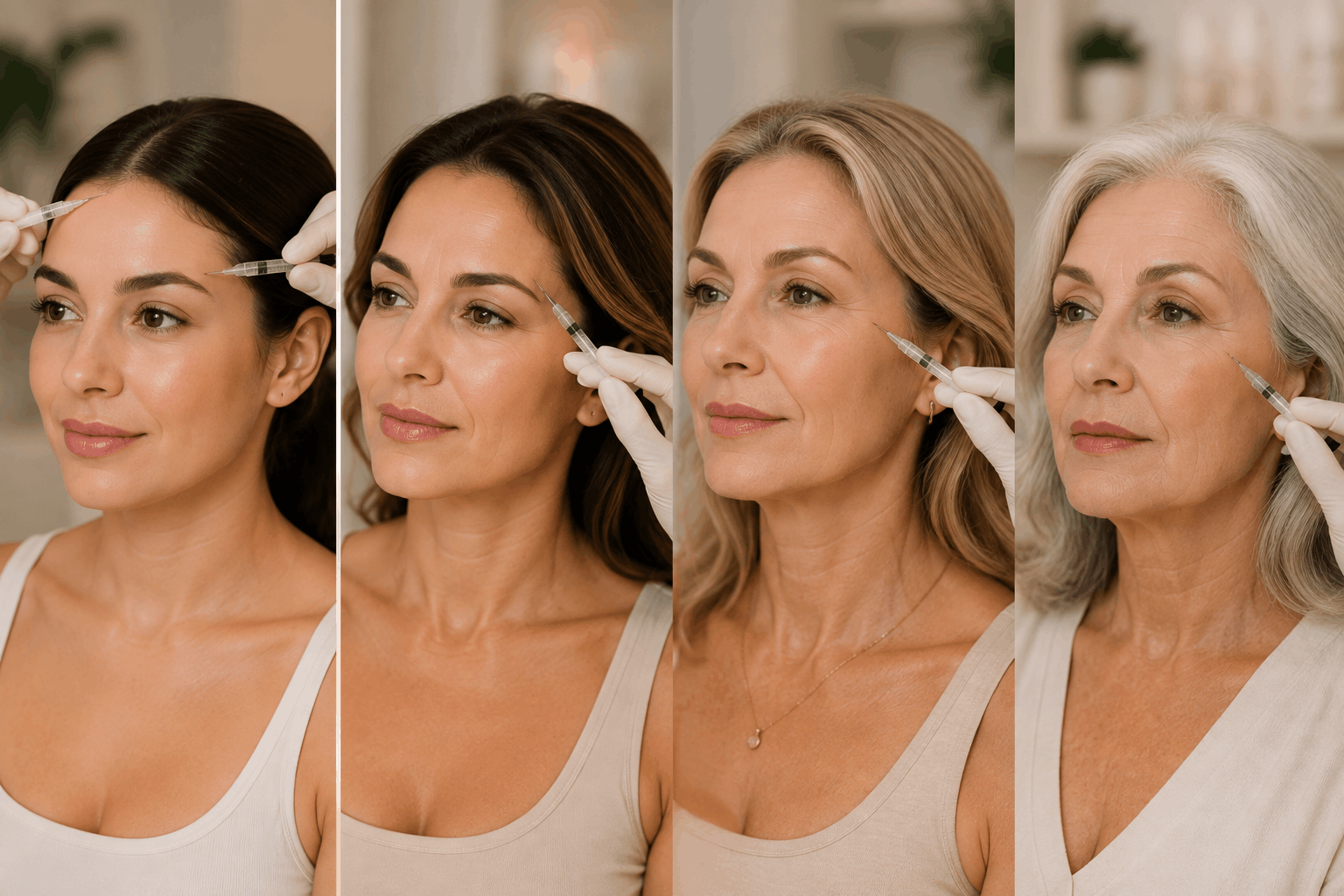
Botox at 35 isn’t necessarily the same treatment as Botox at 55—and it shouldn’t be.
As we age, our skin quality, collagen, facial movement, volume, and underlying structure evolve. The way wrinkle relaxers are used should evolve too.
In your 30s, you may begin noticing expression lines that remain after you stop smiling or frowning. By your 50s, those same lines may be accompanied by changes in skin quality, facial volume, and laxity. That doesn’t automatically mean you need more Botox—it means your treatment may require a different strategy.
At Beauty Energy Exchange, treatment is guided by your individual anatomy, facial movement, age-related changes, and goals—not a standard formula based on your age or number of wrinkles.
Here’s how the conversation around Botox may evolve through your 30s, 40s, 50s, and beyond.
First, What Does Botox Actually Do?
Botox is a neuromodulator, sometimes called a wrinkle relaxer.
It works by temporarily reducing targeted muscle activity. It's commonly used for expression-related lines that develop from repeated facial movement.
At Beauty Energy Exchange, wrinkle-relaxing options include Botox, Dysport, Jeuveau, and Daxxify.
You can learn more about Botox and wrinkle relaxers here.
One of the most important things to understand is that Botox and filler do different jobs.
Botox primarily addresses certain lines associated with muscle movement.
Filler can be used to address concerns involving volume, structure, proportion, or facial balance.
And neither one is designed to correct every sign of facial aging.
That's why a good treatment plan starts by identifying what's actually causing the concern.
Botox in Your 30s: Early Expression Lines & Personalized Treatment
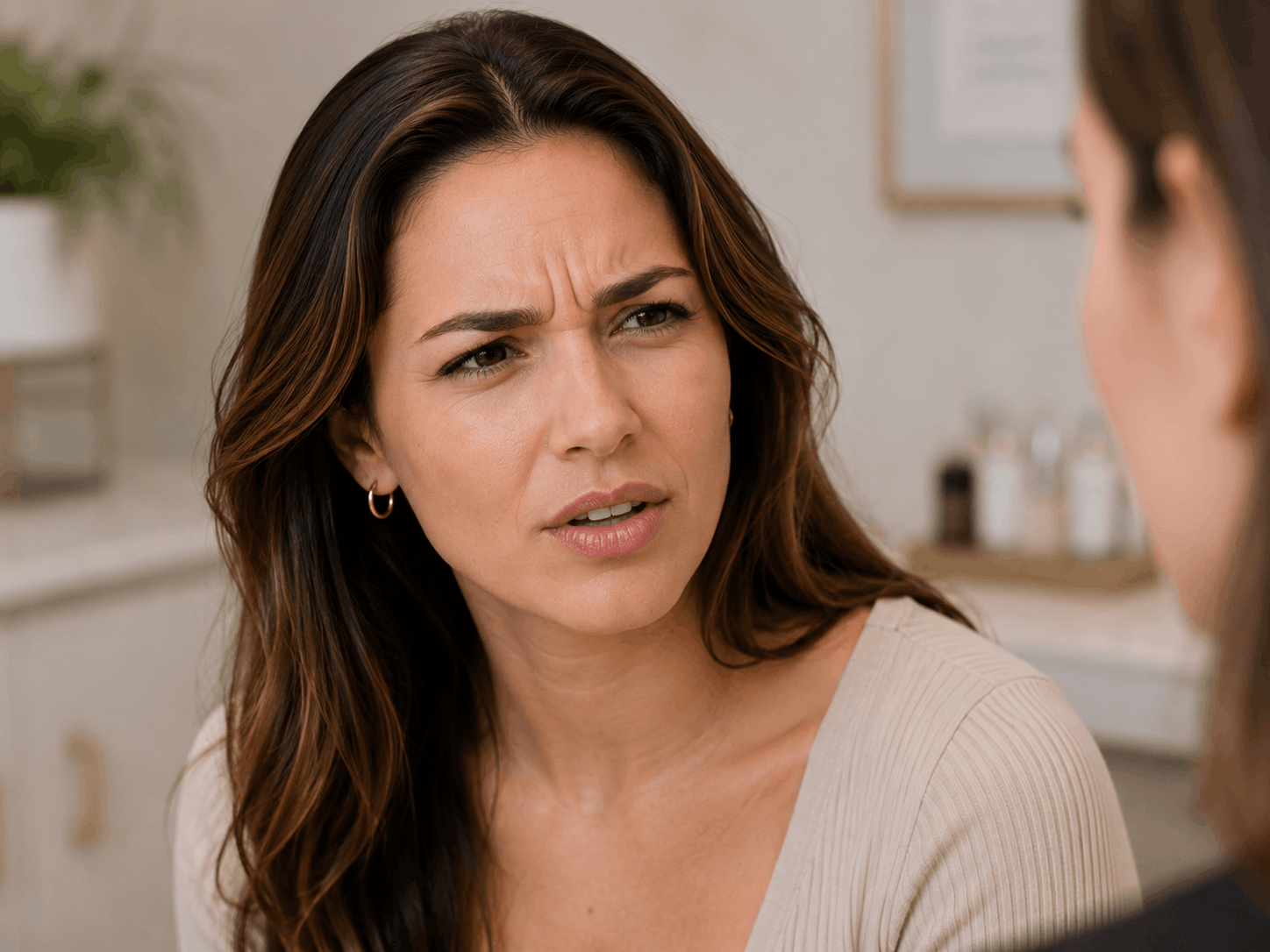
Your 30s are often when you begin noticing that certain expression lines don't disappear as quickly as they used to.
You may see changes around the:
Forehead
Area between the eyebrows
Outer corners of the eyes
Everyone ages differently, so there isn't a specific birthday when someone "should" start Botox.
Some people have stronger facial muscles or more expressive movement and notice lines earlier.
Others may reach their late 30s or beyond without being particularly bothered by them.
Do You Need Preventative Botox in Your 30s?
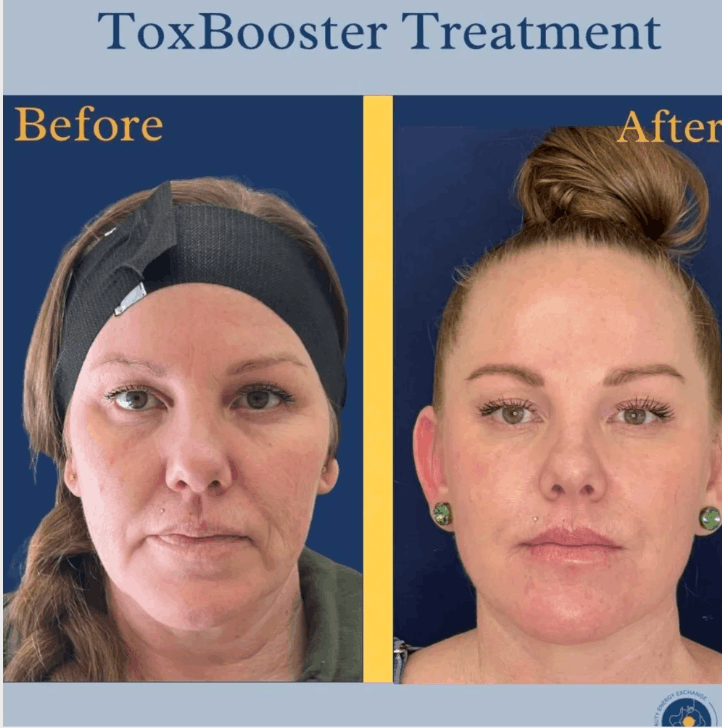
You've probably heard the term “preventative Botox.”
The idea is that reducing repeated muscle movement may help limit the development or deepening of certain expression-related lines over time.
But being in your 30s doesn't automatically mean you need Botox.
Treatment should be based on your facial movement, existing lines, goals, and whether those changes actually bother you.
If you're happy with your appearance, there's no rule saying it's time to start.
Natural Botox in Your 30s
Many younger patients are especially concerned about maintaining expression.
They don't necessarily want to eliminate every line.
They simply want to soften certain areas while continuing to look like themselves.
This is where individualized treatment matters.
Rather than treating according to a standard formula, your provider should evaluate how your face moves and discuss how much movement you want to maintain.
Botox in Your 40s: When Aging Becomes More Complex
Your 40s can be an interesting transition in facial aging.
Expression lines may become more noticeable, but muscle movement is no longer necessarily the only thing contributing to the changes you're seeing.
Collagen production changes with age, and you may also begin noticing:
Changes in skin firmness
Fine lines that remain at rest
Changes in facial volume
Early laxity
Less definition through certain areas of the face
This is where it's particularly important not to expect Botox to solve everything.
If you want to understand more about how collagen changes as we age, read When Does Collagen Loss Start? Early Signs, Causes & How to Slow It Naturally.
Botox May Still Be Useful—But the Treatment Plan May Expand
Wrinkle relaxers can still address certain movement-related lines.
But if what bothers you is actually related to volume loss or skin laxity, adding more Botox isn't necessarily going to solve the problem.
For example:
Expression lines → wrinkle relaxer may be appropriate
Volume loss → filler or another volume-supporting treatment may be considered
Skin laxity → a skin-tightening treatment may make more sense
Changes in skin quality → collagen-focused or regenerative treatments may enter the conversation
This is why I prefer to treat the cause, not simply the age.
Botox in Your 50s: It's Often About the Whole Face
By your 50s, several different aspects of facial aging may be happening at the same time.
Muscle movement still matters.
But changes in collagen, skin elasticity, facial volume, and laxity can become more noticeable.
A patient might come in asking for more Botox because she feels that her face looks older.
But the concern she sees in the mirror may not be caused primarily by muscle movement.
For example, a softer jawline isn't automatically a Botox problem.
Neither are hollow cheeks.
Neither is loose skin.
This is where a thoughtful consultation becomes especially valuable.
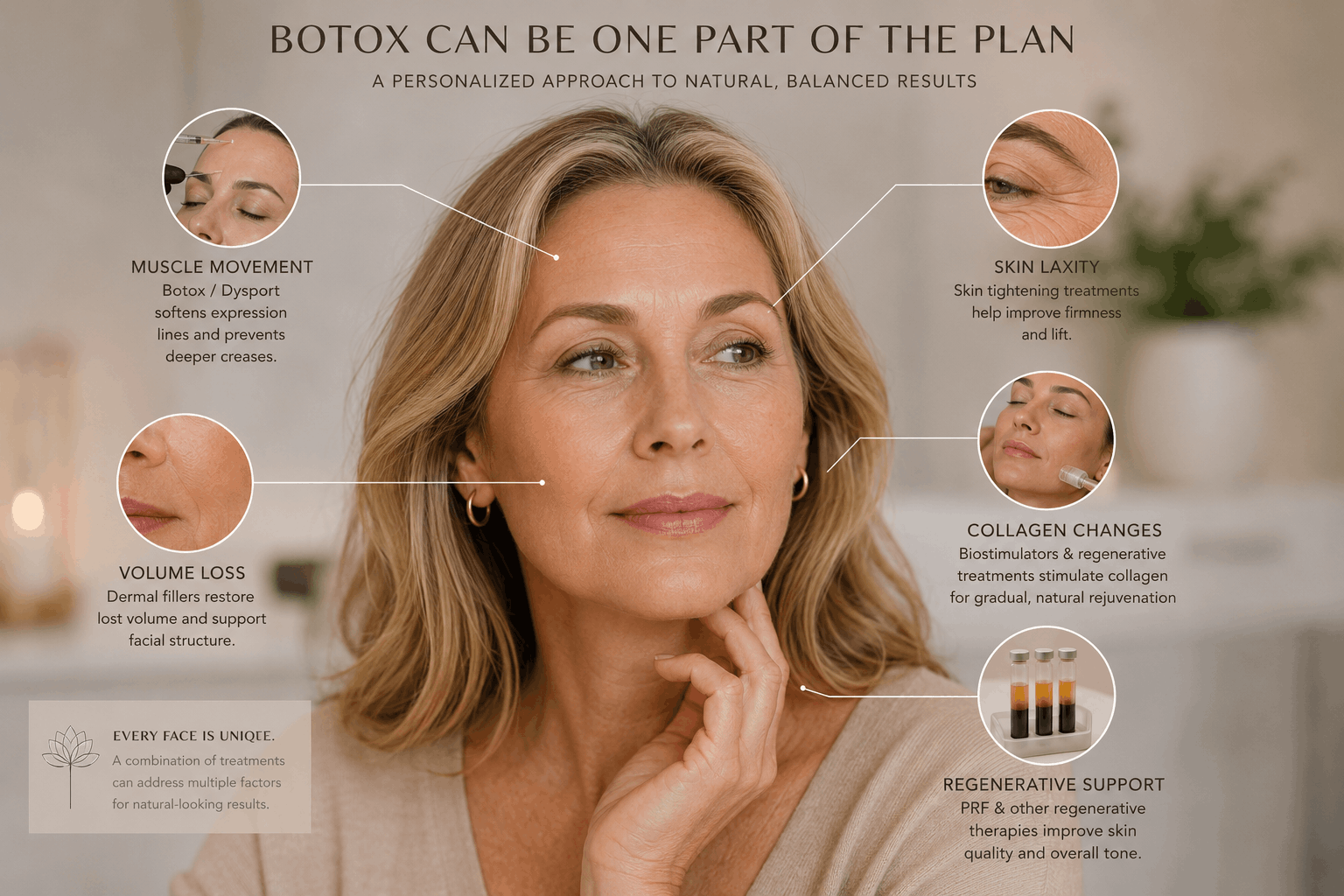
Botox Can Be One Part of the Plan
For appropriate patients, wrinkle relaxers may continue to soften certain expression-related lines in the 50s and beyond.
But the goal isn't necessarily to keep increasing treatment as you get older.
Instead, we may need to look at the face differently.
Is the concern coming from:
Muscle movement?
Volume loss?
Skin laxity?
Collagen changes?
Or several of these at once?
If you're unsure whether the change you're noticing is caused by loose skin or loss of volume, I explain the difference in Skin Laxity vs. Volume Loss: Why the Right Diagnosis Matters.
Getting that distinction right can completely change the treatment conversation.
Botox Beyond Your 50s: Is It Too Late to Start?
No specific age automatically makes someone "too old" to discuss Botox.
Likewise, there's no age at which someone has to start.
The question isn't:
“Am I too old for Botox?”
A better question is:
“What is bothering me, what's causing it, and what treatment—if any—is appropriate?”
Someone who has never had Botox may decide to explore it later in life.
Someone who has used wrinkle relaxers for years may decide to change their treatment approach.
And someone else may decide they're perfectly happy without injectables.
There isn't one correct way to age.
Why Botox Alone May Not Give You the Result You Want
This is where aesthetic treatment can sometimes go wrong.
If every sign of aging is treated as a wrinkle problem, patients can end up doing more and more of the same treatment without addressing what's actually changing.
Aging happens at multiple levels.
That's why a natural-looking approach may involve different tools for different concerns.
Volume Loss
If facial volume or structural support is contributing to the concern, dermal fillers may be considered as part of a personalized treatment plan.
The goal isn't necessarily to make the face fuller.
Thoughtful filler placement may be used to support structure, restore balance, or address specific areas of volume change.
Skin Laxity
If loose skin or early jowling is the concern, adding filler isn't always the answer either.
At Beauty Energy Exchange, XERF skin tightening is a non-surgical radiofrequency treatment designed to stimulate collagen and address skin laxity.
For appropriate patients, this gives us another tool when the concern isn't primarily muscle movement or volume.
Collagen Changes
Biostimulatory treatments offer another approach to facial rejuvenation.
Beauty Energy Exchange offers Sculptra and Radiesse, which are used to stimulate collagen production.
Learn more about Sculptra and Radiesse biostimulators here.
The point isn't that everyone needs Botox plus filler plus skin tightening plus a biostimulator.
They don't.
The point is that each treatment has a different job.
Can Botox Still Look Natural as You Get Older?
Absolutely—but natural-looking treatment begins with realistic goals.
For me, the goal isn't to erase every sign that you've lived, smiled, laughed, or aged.
It's to help you feel refreshed while preserving what makes your face look like you.
That may mean maintaining some movement.
It may mean treating fewer areas.
It may mean combining a small amount of one treatment with another approach instead of trying to accomplish everything with Botox.
And sometimes it means deciding you don't need additional treatment at all.
More isn't automatically better.
How Often Should You Get Botox?
There isn't one treatment schedule that's right for everyone.
How long the effects of a wrinkle relaxer last can vary based on factors such as the product used, treatment area, dose, individual muscle activity, metabolism, and treatment plan.
Rather than deciding that you must have Botox on a rigid schedule because of your age, your provider can help determine when retreatment makes sense based on your individual response and goals.
You also don't need to chase every bit of returning movement.
Some patients prefer maintaining a consistently treated look, while others are comfortable allowing more movement to return between appointments.
That's a personal preference worth discussing with your provider.
Does Botox Change the Way You Age?
Botox doesn't stop the overall aging process.
Your skin, collagen, facial volume, bone structure, and other tissues continue to change over time.
Wrinkle relaxers address a specific component of facial aging: certain lines associated with repeated muscle movement.
Understanding that distinction can help set realistic expectations.
A long-term aesthetic plan may evolve as your face evolves.
What made sense at 32 may not be what you need at 42 or 52.
And that's completely normal.
How Do I Know What Treatment I Need for My Age?
Instead of choosing treatments based on age alone, start with the concern.
If you're noticing expression lines, a wrinkle relaxer may be worth discussing.
If you're noticing volume changes, a different approach may be appropriate.
If you're seeing skin laxity, skin-tightening treatments may enter the conversation.
If several changes are occurring at once, a combination approach may make sense.
That's also why choosing an experienced provider matters.
If you haven't already read it, I recommend What Makes a Great Aesthetic Injector? Credentials, Anatomy & Why Technique Matters.
That article explains what to look for in provider credentials, facial anatomy education, technique, aesthetic judgment, safety, and treatment philosophy.
Personalized Botox & Aesthetic Treatments in Point Loma
At Beauty Energy Exchange Aesthetics & Wellness in Point Loma, San Diego, Nyree Van Maarseveen takes an individualized approach to aesthetic treatment.
Rather than treating according to a patient's age or following a standard injectable formula, the goal is to understand your anatomy, concerns, facial movement, and the result you want.
Nyree's continuing education has included advanced training in Botox, dermal fillers, facial anatomy, facial ultrasound, biostimulatory fillers, regenerative treatments, and PDO threads.
You can learn more about Nyree's education and advanced aesthetic training here:
Whether you're in your 30s, 40s, 50s, or beyond, there isn't a single treatment plan you're supposed to follow.
The right plan is the one designed around you.
Natural. Balanced. Beautifully you.
If you'd like to discuss Botox or other aesthetic options, you can schedule a consultation with Nyree.
Frequently Asked Questions
What is a good age to start Botox?
There isn't one specific age when everyone should start Botox. Treatment should be based on your facial movement, the lines or concerns you're noticing, your goals, and whether you actually want treatment rather than reaching a particular age.
Is Botox different in your 30s vs. your 40s or 50s?
The way Botox is used can change as your face changes. In your 30s, the focus may be primarily on certain expression-related lines. In later decades, volume loss, skin laxity, collagen changes, and other aspects of facial aging may also need to be considered when developing a treatment plan.
Is 40 too late to start Botox?
Being 40 doesn't automatically make it too late to consider Botox. A provider can evaluate your facial movement, existing lines, anatomy, and goals to determine whether a wrinkle relaxer is appropriate for the concern you'd like to address.
Is 50 too late to start Botox?
Age alone doesn't determine whether Botox is appropriate. Someone in their 50s or beyond may still discuss wrinkle relaxers for certain expression-related lines, although other age-related changes such as volume loss or skin laxity may require different treatment approaches.
Can Botox make you look younger without looking frozen?
Botox treatment can be individualized according to your anatomy, muscle activity, treatment area, and goals. If maintaining natural movement is important to you, discuss that with your provider during treatment planning.
Does Botox prevent aging?
Botox does not stop the overall aging process. It temporarily reduces targeted muscle activity and can address certain expression-related lines, but collagen, skin elasticity, facial volume, and other facial structures continue to change with age.
Do you need more Botox as you get older?
Not necessarily. Getting older doesn't automatically mean you should receive more Botox. If a concern is being caused by volume loss, skin laxity, or changes in skin quality rather than muscle movement, increasing Botox may not address it.
